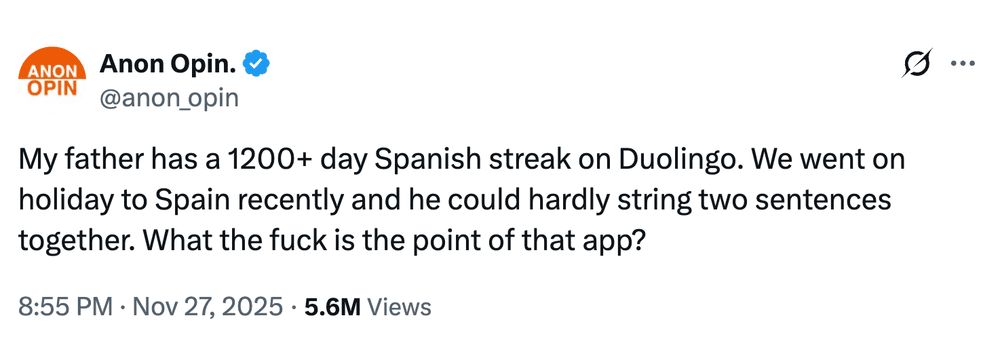
In the past, we may have believed that the availability of so much information would make people consistently smarter. Instead of having to go to the library and researching something in an encyclopedia, you can now find the answer in just a few seconds. However, the opposite appears to be true, we don't use laptops and smartphones for learning more and new things, but we go for entertainment and fun stuff.
At some primary schools, each kid is handed out a laptop in order to follow a personalized learning program. This research⤴ has done a large-scale study (531 children for 10 years) on the One Laptop Per Child (OLPC) program in rural Peru. Here's the result:
Following students over time, we find no significant effects on primary and secondary completion, academic performance in secondary school, or university enrollment. Survey data indicate that computer access significantly improved students’ computer skills but not their cognitive skills; treated teachers received some training but did not improve their digital skills and showed limited use of technology in classrooms, suggesting the need for additional pedagogical support.
It doesn't work.
In Felienne's newsletter⤴, I have read about the two- problem⤴. It's the phenomenon that the average student that is being tutored one-on-one is performing two standard deviations better than students educating in a classroom environment. The idea of providing laptops to every single child in a classroom is to achieve this same goal (because the idea is that laptops provide this one on one tutoring).
We completely forget that a tutor, that is human, provides something that laptops cannot. A tutor can provide motivation and attention. They can also get to know you, see where your pitfalls are, and try a different way of helping you if you are stuck.
I have been a tutor for 2.5 years, and a lot of the times, making people feel at ease and creating a safe environment to ask questions already helped a ton in improving someone's confidence that is needed to finish exams.
Learning is hard. You're confronted with your own barriers of what you know so far, and the limitations of how fast you can improve.